
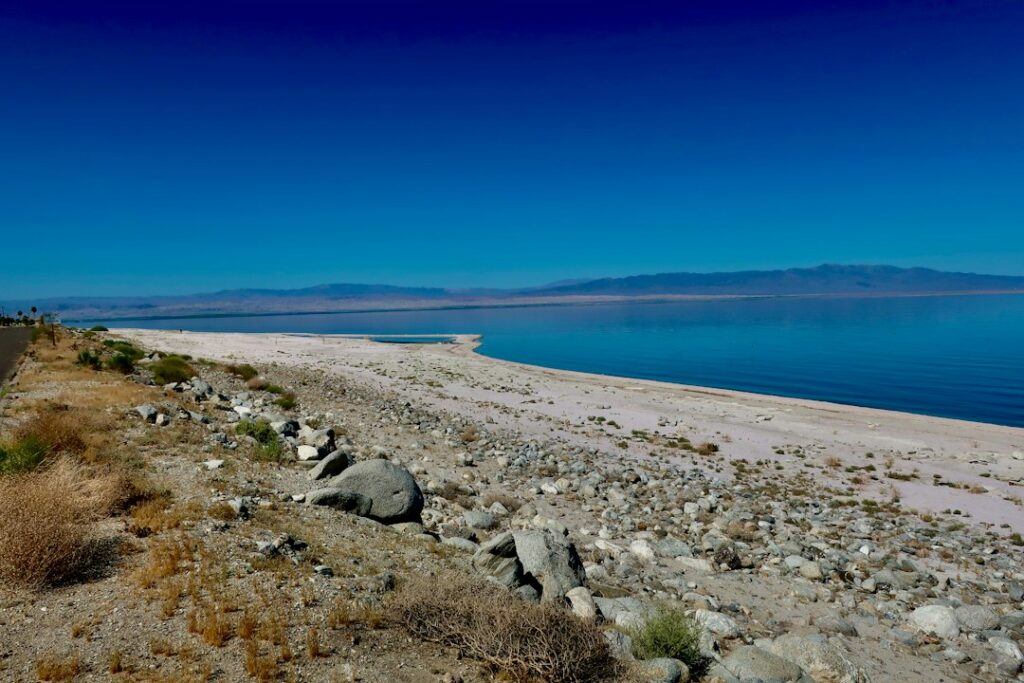
BRAWLEY / IMPERIAL VALLEY — October 27, 2026. What does a retreating shoreline have to do with children’s breathing? A study led by researchers at the University of California, Irvine provides a stronger evidence base for an issue local residents have raised for years. Its October 14, 2025 release reports an association between higher exposure to windblown dust from the shrinking Salton Sea and reduced lung-function measurements in children living near the water body.
The health finding
The research analyzed dust exposure and children’s respiratory measurements in an area where low-income, predominantly Latino communities bear substantial pollution burdens. Researchers reported more pronounced impacts for children closer to the Sea and called for stronger monitoring and mitigation.
This is not a diagnosis of any specific child, nor proof that lakebed dust explains every asthma episode in Brawley, Niland, Westmorland or the broader Imperial Valley. Agricultural dust, vehicle emissions, other industrial sources, heat and household conditions also influence respiratory health. Source attribution and exposure monitoring matter.
Why restoring habitat may also help air quality
When water recedes, the previously submerged bed can become windblown. State projects reduce exposure through surface roughening, vegetation enhancement and engineered ponds. The official Salton Sea Management Program dashboard lists thousands of acres in different stages, but the acreage number itself does not prove that a particular neighborhood’s air quality has reached a safe level.
For a child with breathing symptoms, families should seek individualized advice from a qualified healthcare professional and refer to local public health and air-quality authorities for current alerts. This report is not a substitute for clinical care and does not recommend medication or treatment.
What the public should ask next
Are monitoring stations located where residents spend time, including homes and schools? Can the agencies distinguish lakebed particles from other dust sources? How are improvements measured before and after restoration? Is the data understandable and available in the languages local families use?
Primary sources: UC Irvine’s original research summary; State Water Board explanation of exposed lakebed risks.
Our complete Salton Sea investigation examines funding and health obligations. See Brawley News for local reporting.
Editor’s note: The university reported an association; California58 has not conducted independent medical testing or confirmed person-specific causes.
Help this community newspaper grow
Your support helps build coverage for the people and places this local newspaper serves.
Donate once by card ↗Support Brawley News
Choose how to support Brawley News:
Credit / Debit Card via StripeChoose an amount from $1. One-time support through the publisher's LINKERNO Stripe account.
Continue with PayPal Continue with ZelleZelle payments go to Vitaly Ataev Troshin. Please verify the recipient in your bank before sending. Availability depends on your bank.
Optional reader support. When possible, add “Brawley News” to the payment note. Contributions are not advertised as tax-deductible. Support does not influence editorial decisions.More from Brawley News
- Brawley News: Gateway Plan Proposes Up to 408 Apartments, Retail and a 100-Room Hotel on 66 Acres →
- Brawley News: Meserve Park Renovation Proposes New Playgrounds, Pickleball and Shaded Walking Trail →
COMMUNITY
Comments
Join the California58 conversation. You must be signed in to comment.
Create a free California58 account or sign in with an available social provider.